


Walk into any well-curated home and you will almost always find one thing anchoring the room: a rug. Not a screen, not a statement sofa, not a pendant light - a rug. It holds the space together, absorbs the noise, and, when chosen well, tells a story that no flat-pack alternative ever could. The question in 2026 is no longer whether to invest in a rug but in which kind. Machine-made rugs have become increasingly convincing at first glance, yet the gap between them and a genuinely handmade piece has only grown more significant once you understand what you are actually comparing.
This guide examines the real differences between handmade and machine-made rugs - covering construction, materials, longevity, and value - so you can make an informed, confident choice for your home.
What Makes a Rug "Handmade"?
The term handmade covers several distinct techniques, each requiring a different skill set and producing a different result. What they share is the absence of automated looms and the presence of a human artisan at every stage of creation. A hand-knotted rug is built knot by knot, with each individual thread tied around the warp - sometimes hundreds of thousands of knots in a single piece. A handwoven flatweave, such as the traditional Indian dhurrie, interlaces warp and weft entirely by hand on a handloom. A hand-tufted rug uses a tufting tool but still relies on skilled human judgment for pile depth, texture, and finishing.
Machine-made rugs, by contrast, are produced on power looms that replicate a pre-programmed design at high speed, using synthetic yarns and an automated process that takes minutes rather than months. The efficiency is undeniable. The craft is absent.
A Brief History of Rug-Making
The handmade rug is one of humanity's oldest continuous art forms. The Pazyryk carpet, discovered in a Siberian tomb and dating to around 500 BCE, already demonstrates a sophisticated knotting technique and geometric precision that rivals much of what is produced today. In the Mughal courts of 16th-century India, Persian weavers were brought to the subcontinent, blending their knotting traditions with Indian botanical motifs - a creative exchange that gave rise to some of the world's most celebrated rug designs. The dhurrie, meanwhile, evolved as a distinctly Indian flatweave tradition, worn in royal households and ashrams alike for its versatility and the clean honesty of its woven surface.
Industrial looms arrived in the 19th century and democratised floor covering globally. But they also stripped weaving of its place as a living craft. The revival of interest in handmade textiles over the past two decades reflects a broader cultural correction: a recognition that speed and abundance are not the same as quality and meaning.
Types of Handmade Rugs
Hand-Knotted Rugs
The most labour-intensive and durable category. Each knot is tied individually around the warp threads, creating a dense pile that can withstand decades of heavy foot traffic. The knot count - measured per square inch - determines the fineness of the design. A high-quality hand-knotted rug in wool or silk is genuinely an heirloom object; well-maintained pieces from Persia and India continue to appreciate in value over time.
Handwoven Flatweave Rugs (Dhurries)
Flatweave rugs like the classic Indian dhurrie have no pile - the design is formed entirely by the interplay of warp and weft threads. They are lightweight, reversible, and exceptionally practical in warm climates. The handloom cotton dhurrie is a particularly refined example: the texture is crisp, the patterns carry genuine artisan variation, and the cotton breathes beautifully. These rugs work as well in a contemporary apartment as they do in a heritage bungalow.
Hand-Tufted Rugs
Sitting between hand-knotted and machine-made in both process and price, hand-tufted rugs are made by pushing yarn through a stretched fabric backing using a handheld tool, then shearing and finishing the pile by hand. They are faster to produce than knotted rugs but still carry a level of artisan input that machine weaving cannot replicate. They are an excellent entry point into the world of handmade textiles for buyers who want quality without the premium of a fully hand-knotted piece.
Handmade vs. Machine-Made: The Real Difference
The most obvious difference is material. Handmade rugs are almost always made from natural fibres - wool, silk, or cotton - because these materials respond to hand-weaving in a way that synthetics do not. Wool, in particular, has a natural lanolin coating that repels stains and dirt, a quality that no synthetic treatment can fully replicate long-term. Machine-made rugs are predominantly polypropylene or polyester: consistent, inexpensive, and without memory. They flatten under load, fade under light, and rarely last beyond a decade of regular use.
The second difference is individuality. Every handmade rug carries micro-variations - a slight shift in the pile direction, a thread count that fluctuates by a knot or two - that are the direct signatures of the human hands that made it. These are not flaws. They are proof of origin. A machine-made rug is identical to every other rug produced in that batch. There is no story embedded in its construction, no village, no weaver, no inherited technique.
The third and perhaps most consequential difference is longevity. A quality handmade rug, properly cared for, will outlive the home it decorates. It can be professionally washed, repaired, and re-knotted. Machine-made rugs are, by design, disposable - an economic model built on replacement, not preservation.
How to Style Handmade Rugs in Your Home
A hand-knotted or handwoven rug works as the visual anchor of any room. In a living room, place it so that the front legs of all seating rest on its surface - this creates cohesion without the rug disappearing under furniture. In a bedroom, a rug placed two-thirds under the bed, with enough exposed on both sides to greet bare feet in the morning, adds warmth and intention. For a dining area, size matters: the rug should extend at least 60cm beyond the chairs when pulled out, so no one scrapes across a bare floor.
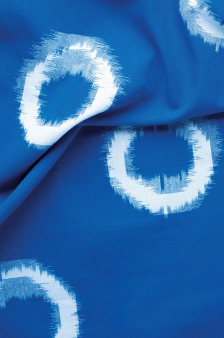
The Zaminda collection at Shyam Ahuja is a strong starting point for those drawn to bold, graphic weaves with a distinctly Indian sensibility, while the gallery of collections offers a broader view of what is available across techniques and palettes. For those with specific project requirements, bespoke custom design is available, allowing you to specify dimensions, colour, and weave structure from the ground up.
Care & Maintenance
Handmade rugs reward attentive ownership. Rotate your rug every six months so foot traffic wears the pile evenly. Vacuum gently - without the beater bar - to lift surface dust without damaging the fibres. For spills, blot immediately with a clean cloth; never rub, as this pushes the stain deeper into the pile. Wool and silk pieces benefit from professional cleaning every 12 to 18 months. Ask about stain coating treatments that can provide additional protection without altering the rug's natural texture or appearance. Keep handmade rugs out of prolonged direct sunlight to prevent uneven fading, and always store rolled - never folded - if they need to come up for a period.
Frequently Asked Questions
How can I tell if a rug is handmade or machine-made?
Flip the rug over and examine the back. A handmade rug - whether hand-knotted or handwoven - will show slight irregularities in the knot pattern, visible individual knots or weft lines, and a texture that differs slightly from the front. Machine-made rugs have a perfectly uniform backing, often with a latex or canvas layer, and the pattern is identical front to back with no variation.
Are handmade rugs worth the higher price?
Yes - with the right perspective. A quality hand-knotted or handwoven rug made from natural wool or silk can last 50 to 100 years with proper care. Compared to a machine-made rug that may need replacing every 5–10 years, the cost-per-year of ownership often favours the handmade piece. They also appreciate in value and can be passed down as heirlooms.
What materials are used in handmade rugs?
The most common natural materials are wool, silk, and cotton. Wool is the most widely used - resilient, naturally stain-resistant, and ageing beautifully. Silk adds a lustrous sheen and is used in finer, more intricate pieces. Cotton is typically used in flatweave dhurries for its lightness and breathability. Machine-made rugs, by contrast, are most commonly made from polypropylene or polyester.
How long does it take to make a handmade rug?
It depends entirely on the technique and size. A small hand-knotted rug may take a few weeks; a large, intricate piece with a high knot count can take a skilled artisan a year or more. Handloom flatweave dhurries are generally faster to produce but still require expert skill - something a machine can never replicate.
Can I get a handmade rug in a custom size or design?
Absolutely. One of the key advantages of working with a heritage house like Shyam Ahuja is the ability to commission a bespoke handmade rug - specifying dimensions, colour palette, pattern, and material. This is ideal for architects and interior designers who need exact specifications for a project. Reach out via the contact page to begin a conversation.
How do I care for a handmade rug?
Rotate the rug every six months for even wear. Vacuum gently without the beater bar. For spills, blot immediately - never rub. For wool or silk pieces, professional cleaning is recommended every 12–18 months. Avoid direct sunlight to prevent fading, and consider a non-slip underlay to protect both the rug and your floor.
The choice between handmade and machine-made ultimately comes down to what you want a rug to be: a temporary floor covering or a permanent piece of your home. Craftsmanship is not a premium add-on - it is the difference between an object and an heirloom. In 2026, with so much of daily life defined by disposability, a well-made handmade rug is a quiet and deliberate act of choosing otherwise. Visit the Shyam Ahuja FAQ for more guidance, or explore the full range of services available to trade and residential clients.
Explore Shyam Ahuja's Handmade Rug Collections
From handloom cotton dhurries to the signature Zaminda weaves, every piece is made by skilled artisans using time-honoured techniques and natural materials. Custom sizes and bespoke designs are available for residential and trade projects.
